
Buying off the plans: what to check before you sign
A plain-English guide to buying off the plans in New Zealand: deposits, sunset clauses, the valuation gap, and the contract checks to make before you sign.
The short answer
- What it means
- Signing to buy a home that has not been built yet, from drawings and specifications
- What you sign
- A binding contract. The render is marketing, the specification is the promise
- Your deposit
- Should sit in a trust account until settlement, never funding the build
- Sunset clause
- A date after which the contract can be cancelled. Read it twice
- The valuation gap
- If the bank values it below your price at settlement, you cover the difference
- If buying to invest
- Check your bright-line timing before you sign, not after
Buying off the plans means committing to a home before it exists. You sign against drawings and a specification, then settle when the building is finished and titled, sometimes a year or more later. Done with your eyes open it's a sound way to secure a new home. Done blind, it's stressful.
We sit on the other side of these contracts, so we know exactly which clauses protect a buyer and which ones get skimmed. This is the list I'd give a mate before they signed anything.
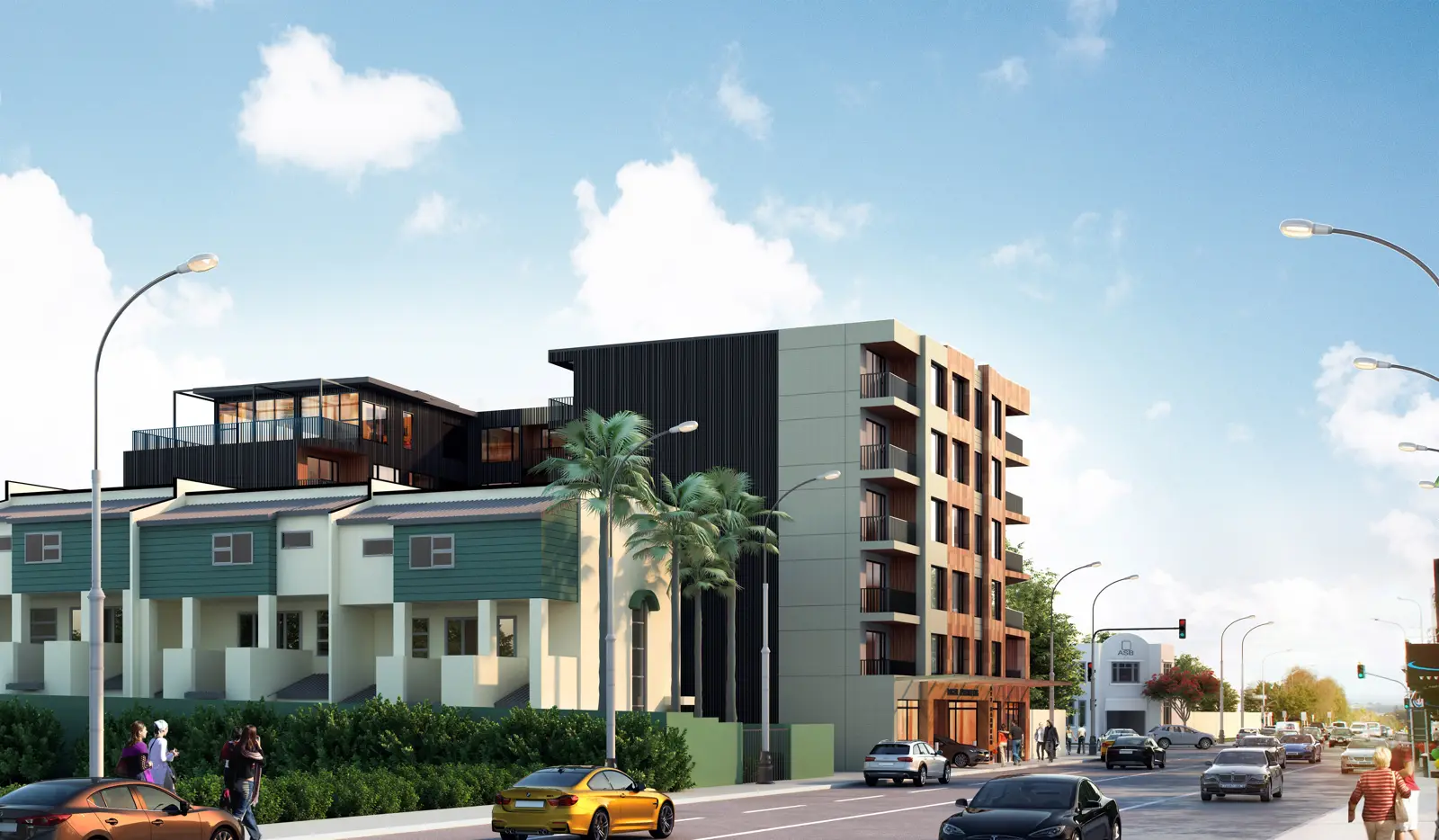
The drawing buyers signed against: the Logan as a render, before construction began.
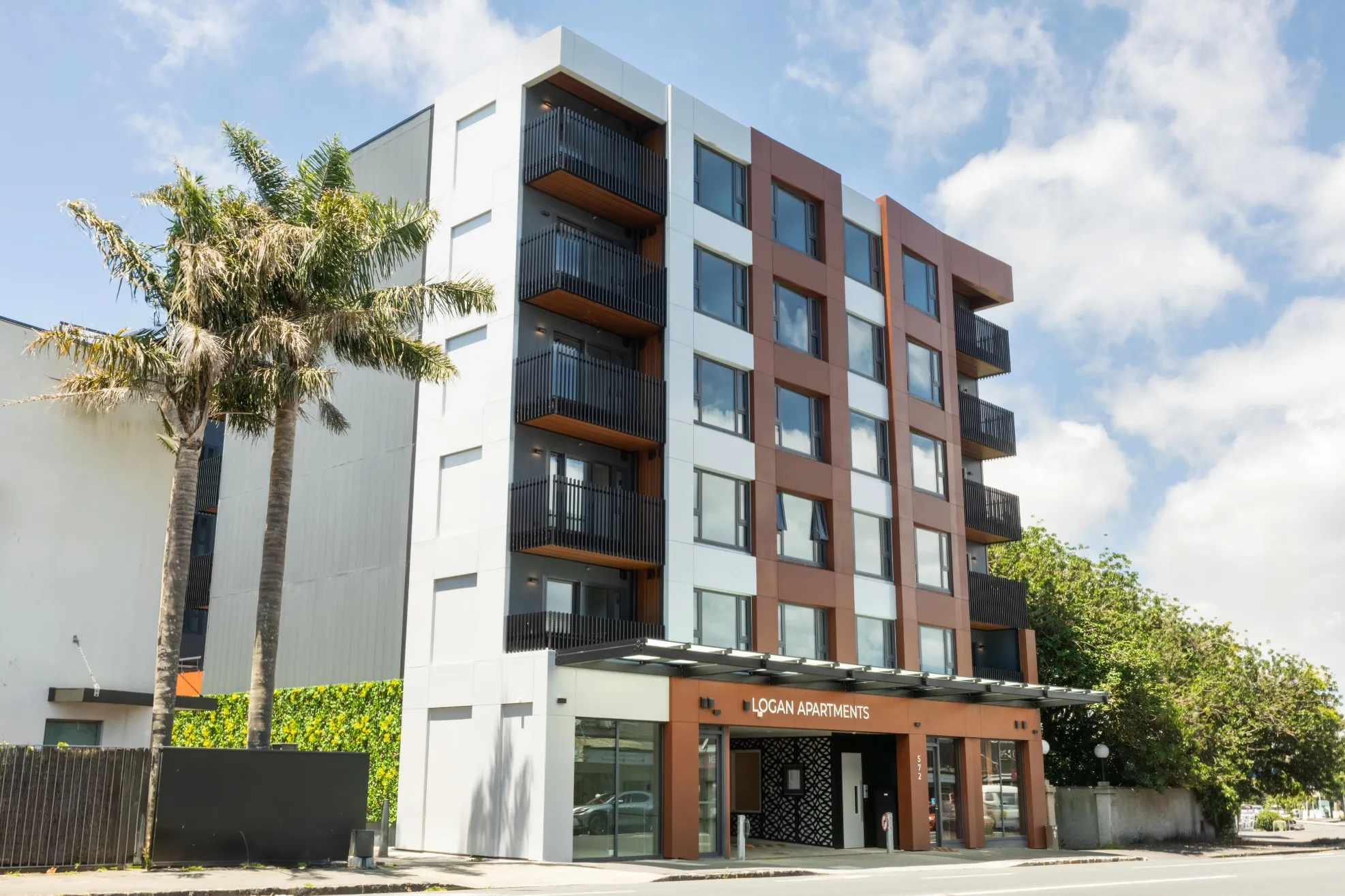
And the same corner, delivered in 2023. This is the whole off-the-plan bargain in two images.
One thing before the list. Your solicitor should review the full contract before you sign anything, and everything below is a prompt for that conversation.
What am I actually signing when I buy off the plans?
An off-the-plan agreement is a sale and purchase contract for a property that doesn't physically exist yet. The contract describes what will be built: floor area, layout, fixtures, finishes, and for an apartment the body corporate structure, including the first year's body corporate budget, which the developer sets. Both sides are bound to complete once it's built and titled.
Two things make it different from buying an existing home. There's a long gap between signing and settling, so you commit now and pay the balance later. And you're relying entirely on the specification, so the quality of that document matters more than anything else in the pack. Vague specs are where disputes start.
Where does my deposit go when I buy off the plans?
You'll typically pay around 10% on signing, though it varies. The percentage matters less than the answer to one question: where is that money held?
In a well-run development the deposit sits in a solicitor's or agent's trust account, or is secured by a deposit bond or bank guarantee. It is not spent on construction. Ask directly, and ask what happens to it if the project doesn't proceed. If the answer is fuzzy, that tells you something.
The deposit doesn't sit there dead, either. Money held in trust is usually placed on interest-bearing deposit, and who receives that interest at settlement is set by the contract, so ask the question up front rather than discovering the answer on settlement day. The balance is due at settlement, once the building is complete and the title has issued. Talk to your bank early though, because lenders treat off-the-plan purchases differently from existing homes.
What is a sunset clause, and why does it matter?
A sunset clause sets a long-stop date by which the project must hit an agreed milestone, usually titles issued or code compliance. If the date passes without it, one or both parties can cancel and the deposit comes back.
It exists to protect you from a project that stalls forever. But the drafting decides who it actually protects. Some clauses let only the buyer cancel. Some let the developer cancel too, and in a rising market a developer-held cancellation right can be used to walk away and re-sell the same home at a higher price. That's the opposite of protection.
So the questions for your solicitor are: who holds the cancellation right, and is the sunset period realistic for the build with a fair margin? If I could make a buyer read one clause properly, it's this one. We've written a fuller piece on it: sunset clauses, and the version that doesn't protect you.
What happens if the valuation comes in below the price?
One risk catches people who have done everything else right. You agree a price today. Your bank values the property near settlement, maybe eighteen months later. If the market has softened in between, the valuation can come in under your contract price, and the bank lends against the lower number. The shortfall is yours to find in cash.
That's not a reason to avoid buying off the plans. It's a reason to keep a buffer and not stretch to the last dollar of your pre-approval. A mortgage adviser who's handled off-the-plan settlements will know how to structure for it. Also worth asking: does your pre-approval even survive to a settlement date a year away? Most don't, they lapse and get reissued.
Will the finished home look like the render?
Renders sell a feeling. The specification is what you can hold the developer to. Before signing, be clear on what's included (appliances, flooring, heating, carpark, storage) versus what's an optional extra, and read the variations clause.
Most contracts let the developer substitute materials of equivalent quality, and over a two-year build that's fair, supply chains move. What you're looking for is wording that holds the substitution to genuine equivalence rather than leaving it open-ended. A developer who specifies tightly and reserves only narrow substitution rights is telling you they're confident in what they're delivering.
Dimensions are described to a tolerance too. A small variance on final floor area is normal and the contract should say how it's handled.
How does the bright-line test apply to an off-the-plan purchase?
The brightline clock generally starts when the title registers to you at settlement, not when you signed. On an off-the-plan purchase those dates can be years apart, so if you're modelling a future sale, count the two-year window from settlement. Plenty of people count from signing and get the maths wrong.
The short version
Before you sign: your own solicitor has reviewed the contract. You know where the deposit is held. You know who can cancel under the sunset clause and when. You've stress-tested the valuation gap with a buffer. The specification is tight and you know what's included. And you've checked the one thing no clause can give you, which is whether this developer has actually finished what they started before.
That last check is the quiet one, and it's the best protection on the list. Contracts manage risk. Track record removes it. Ours is on record in our completed projects, and you're welcome to visit any of them, starting with the Logan Apartments in Epsom, completed in December 2023 and fully sold.
This is general information only. Have your own solicitor review any contract before signing. If you'd like to hear when Heartland opens registrations on a new project, register your interest.
Sources
- Inland Revenue: The brightline test (brightline start and end dates and the two-year period)
Questions people ask about buying off the plans
What does buying off the plans mean in New Zealand?+
Buying off the plans means signing a binding sale and purchase agreement for a home that has not been built yet. You commit against drawings and a written specification, then pay the balance at settlement once the building is finished and the title has issued, often a year or more later.
How much deposit do I pay when buying off the plans?+
Typically around 10% on signing, though it varies by project. The percentage matters less than where the money is held: in a well-run development the deposit sits in a solicitor's or agent's trust account, or is secured by a deposit bond or bank guarantee, and is never spent on construction.
What happens if my bank's valuation comes in below the contract price at settlement?+
The bank lends against the lower valuation and the shortfall is yours to cover in cash. This is the risk that catches buyers who have done everything else right, so keep a buffer rather than stretching to the last dollar of pre-approval, and check whether your pre-approval even survives to a settlement date a year away.
Will the finished home look like the render?+
The render is marketing. The specification is what you can hold the developer to. Most contracts allow substitution of materials of equivalent quality, which is fair over a long build. What you want is wording that holds substitutions to genuine equivalence, and clarity on what is included versus an optional extra.
When does the bright-line clock start on an off-the-plan purchase?+
Generally when the title registers to you at settlement, not when you sign the contract. On an off-the-plan purchase those dates can be years apart, so model any future sale from the settlement date. Counting from signing is a common and expensive mistake.
What should I check before signing an off-the-plan contract?+
Five things: your own solicitor has reviewed the contract, you know where the deposit is held, you know who can cancel under the sunset clause and when, you have stress-tested a below-price valuation with a cash buffer, and the developer has a track record of actually completing projects.
About the author

James is Heartland’s development manager and the second generation of the family in the business, working across feasibility, consenting, consultant engagement and buyer research. He came to development through construction, and holds degrees in property and commerce from the University of Auckland.
Related reading
- GuideWhere does my deposit actually go?The single question that tells you most about a developer.
- GuideSunset clauses explainedWhat the clause does, and what a fair period looks like.
- GuideBody corporate fees in NZOn a new build, the developer sets the first levy. This is how to check it.
- Case studyLogan Apartments, Greenwoods CornerA completed Heartland project, from consent to keys.